CASE STUDY
STAX – RULE BUNDLES
Organising compliance and security rules into bundles to follow
industry best practices for AWS services and compliance frameworks.
industry best practices for AWS services and compliance frameworks.


Stax is an all-in-one cloud platform (PaaS) that provides a secure foundation for migrating and deploying apps to AWS, while facilitating cost savings and increasing efficiency and visibility.
The Spotlight module provides continuous assurance against industry compliance standards including HIPAA, GDPR, CIS, PCI-DSS and NIST. It follows the AWS best practices outlined in their architecture framework.
THE PROBLEM
POSTPONED BEST PRACTICES
With the increased evolution of cloud computing, new cloud security and governance practices are often postponed because of time constraints, absence of skilled people and knowledge gaps in small and medium companies.
WHAT WE DID
To manage any organization’s risk and security standards, we created a streamlined rules section and a new feature called Rule Bundles.
Each bundle is a collection of rules focused on enabling organizations to achieve a specific external compliance framework or follow industry best practices for an AWS service. Rule Bundles quickly identify failing rules, understand where they fit within the organization’s AWS ecosystem, and more easily fix their root cause.


WHITEBOARDS, PAPERS AND MARKERS
I led an initial kickoff workshop with the product manager, front and back-end developers that helped to shape the experience, learn about industry standards, gather information from internal and external users.
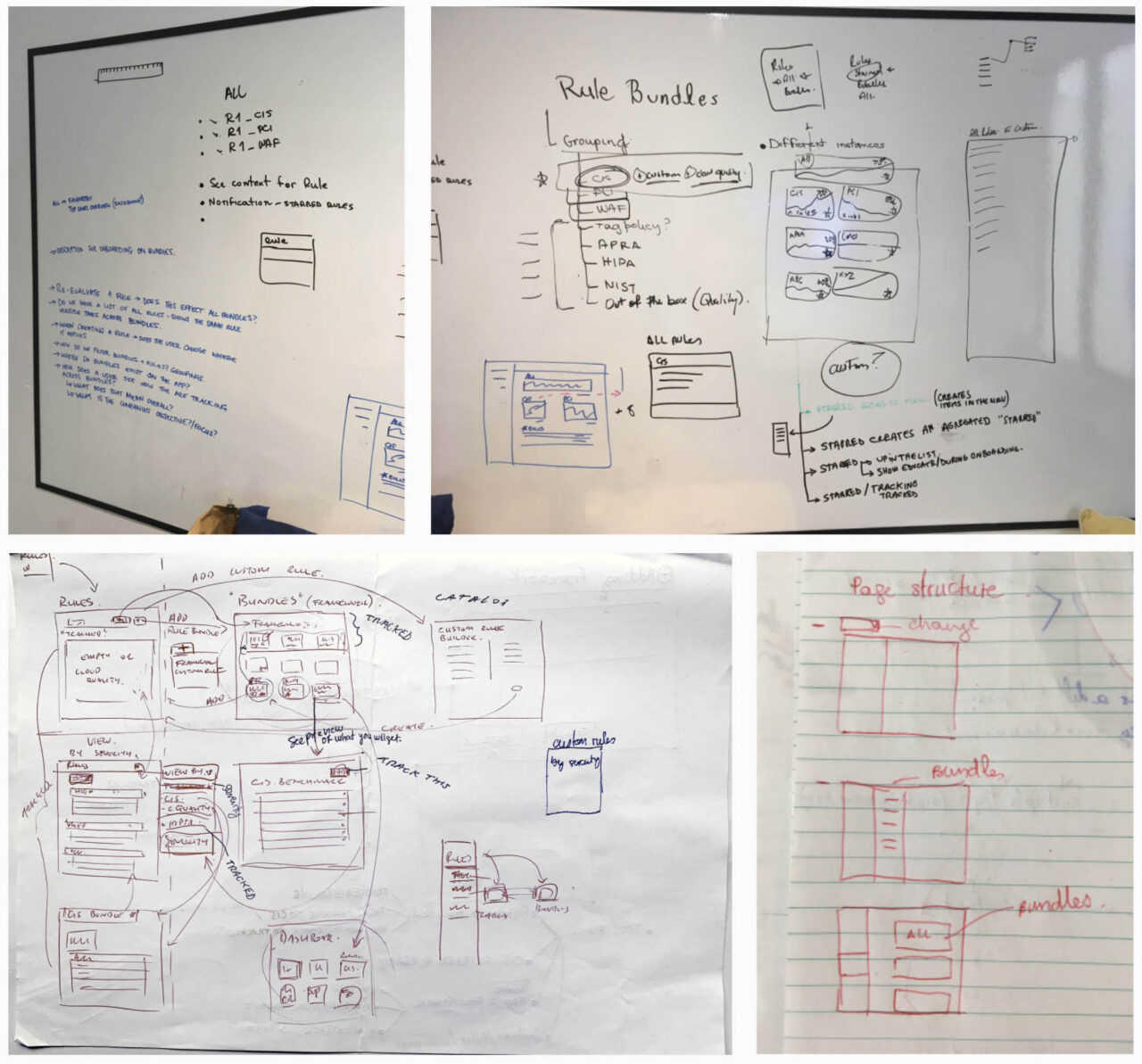
Workshops with cross functional teams for quick sketching was key to make quick decisions.
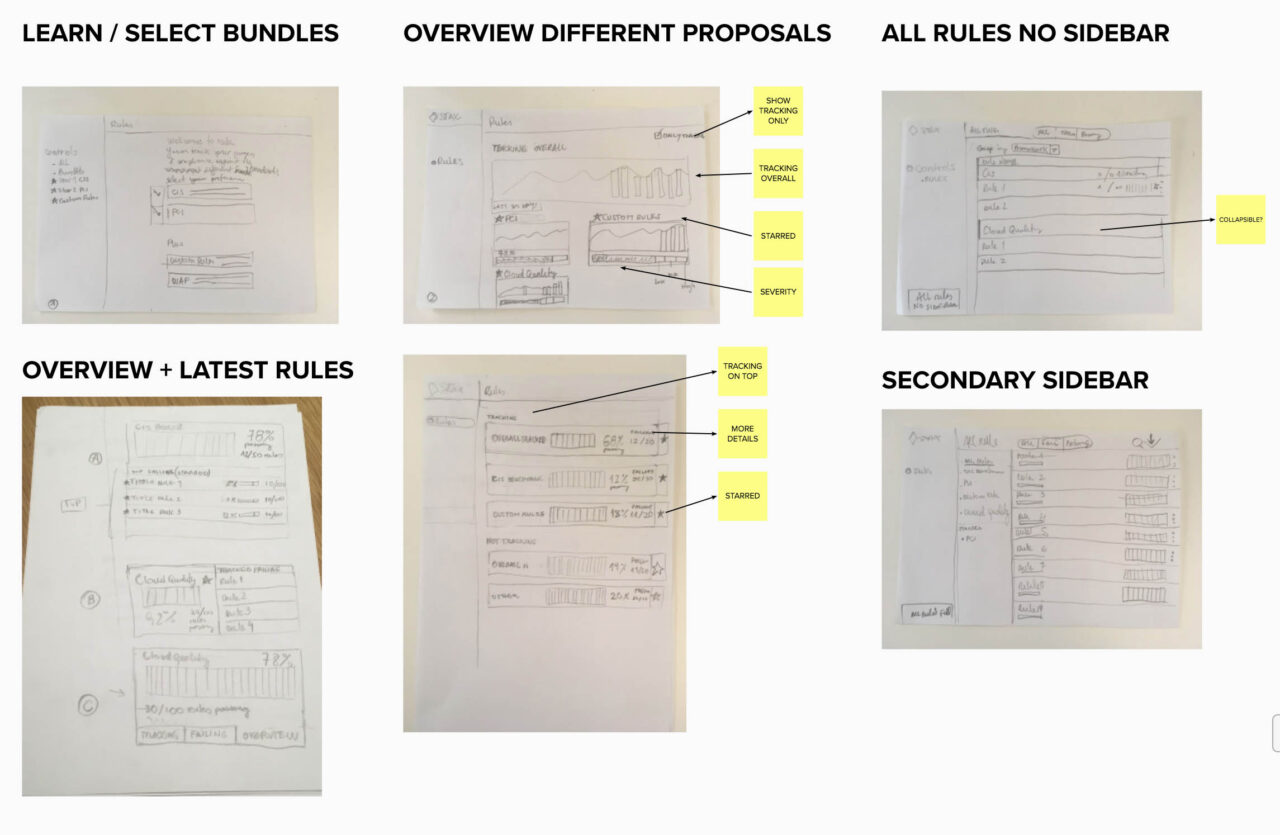
I use Mural to annotate and share different sketches and ideas quickly.
EXPLORING IDEAS QUICKLY
I sketched different ideas for the onboarding, overview and rules display in bundles.
At this stage, paper gives the ability to quickly generate interesting ideas before launching into development.
REUSE – REUSE – REUSE
When translating the sketches into high fidelity prototypes I relied on the components and design system, drastically reducing the time and effort to create new userflows.

To maximise efficiency, many times I use mid-fidelity designs reusing components to test and validate the paper sketched ideas. Whilst is always better to design with real data, this approach helps to get everyone on the same page.

Testing different layouts based on the paper sketches. Mid fidelity designs help to get user in the journey.
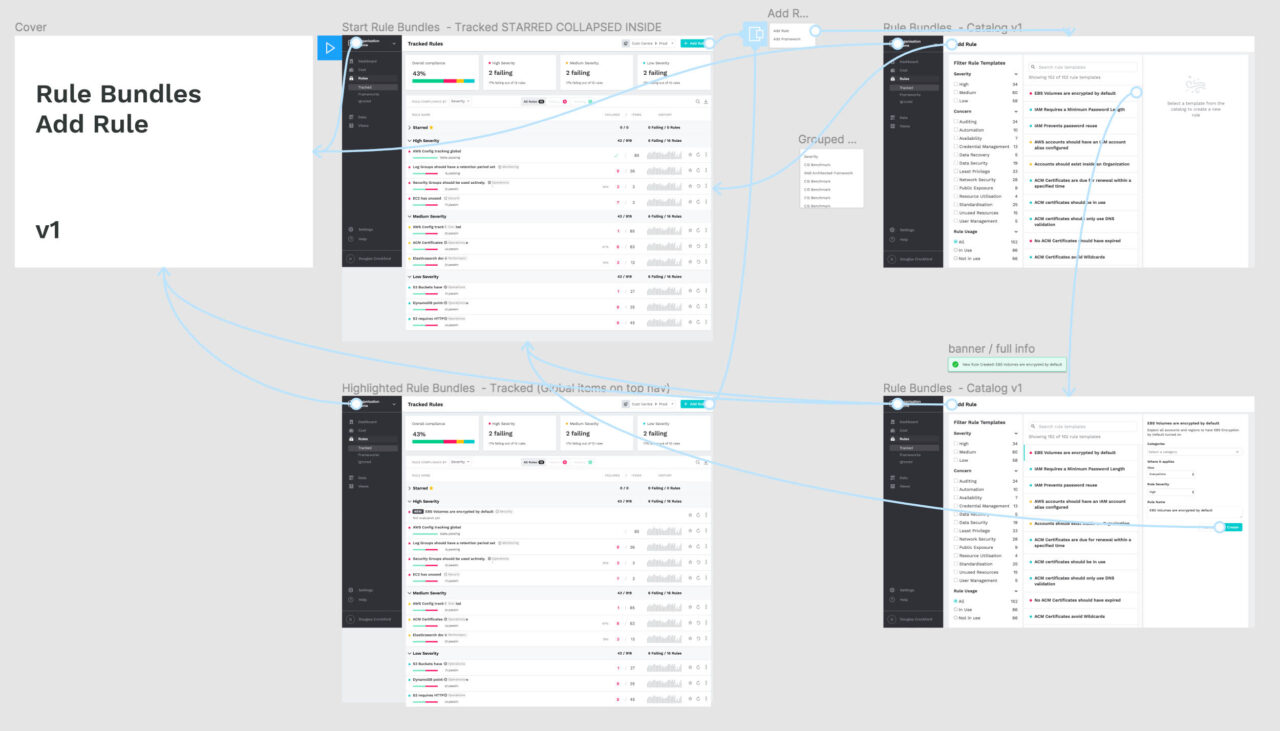
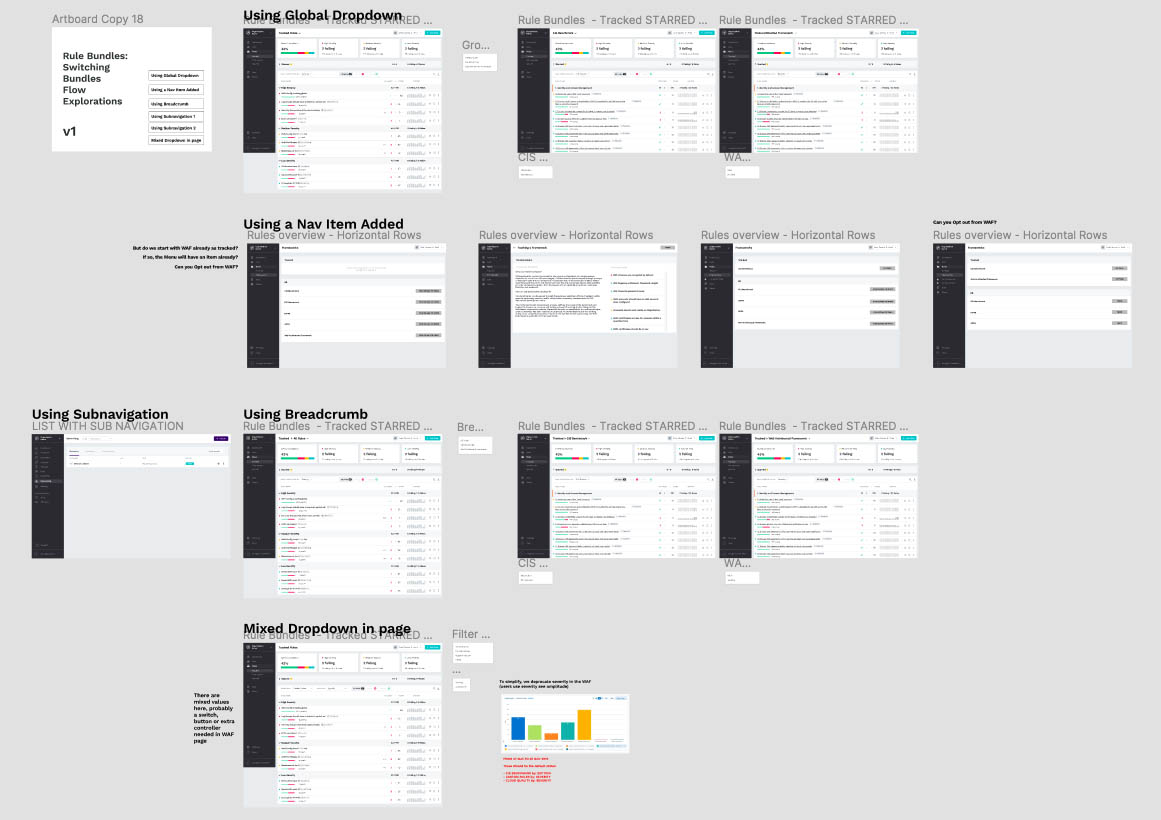
Getting specific feedback for specific tasks.
TESTING ONE USERFLOW FIRST, THEN ALL COMBINED
Creating individual prototypes for each flow allowed me to to get specific feedback on each part.
Later, all the insights were combined into a complex prototype.
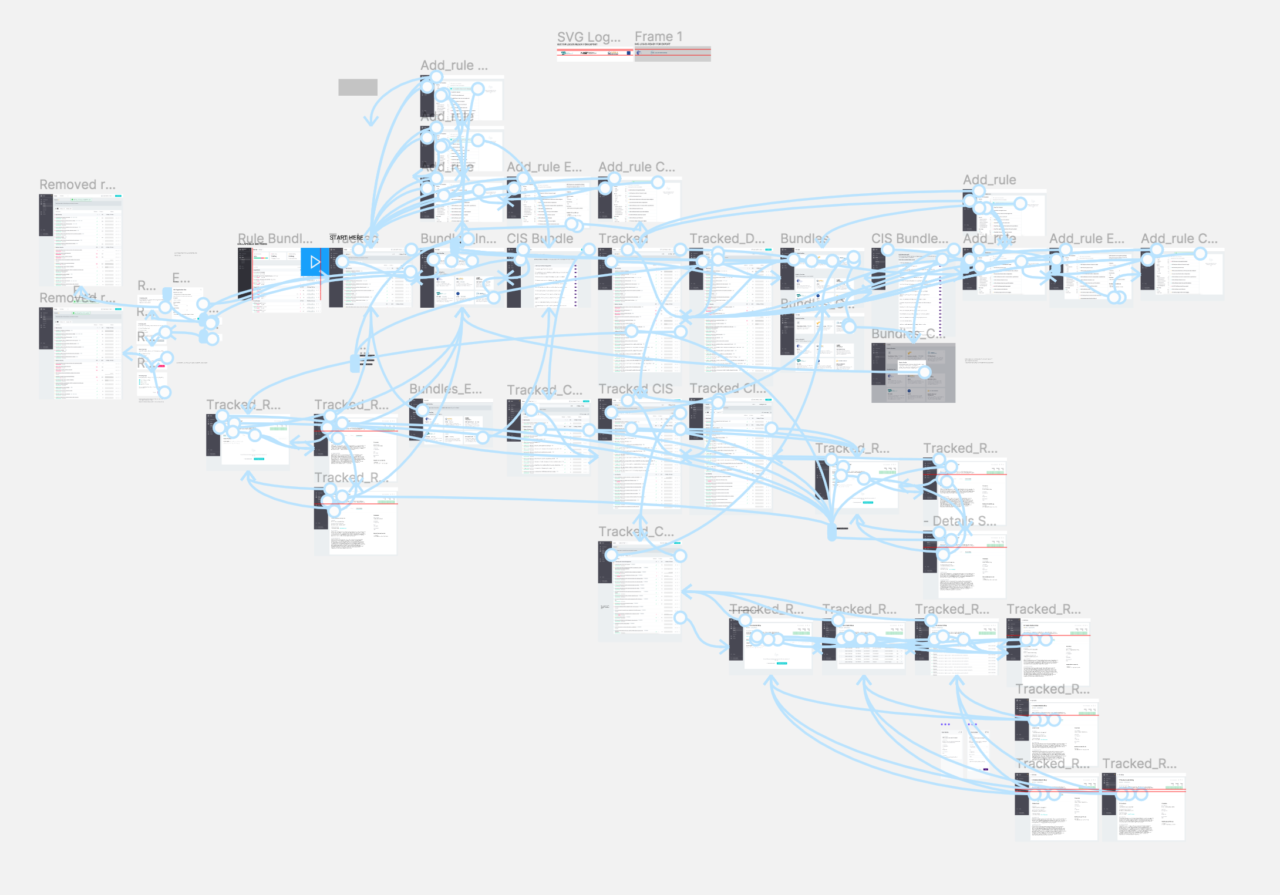
All userflows combined into a complex prototype.
Whilst you can have all the userflows in one complex prototype, you can’t prevent dead ends. When you test it, not all the status changes and data updates can be reflected if you don’t add logic.
UNDERSTANDING BUNDLES & FRAMEWORKS
To better understand the complexity of the information, I conducted research on the data structure for the bundles and frameworks that will be supported.
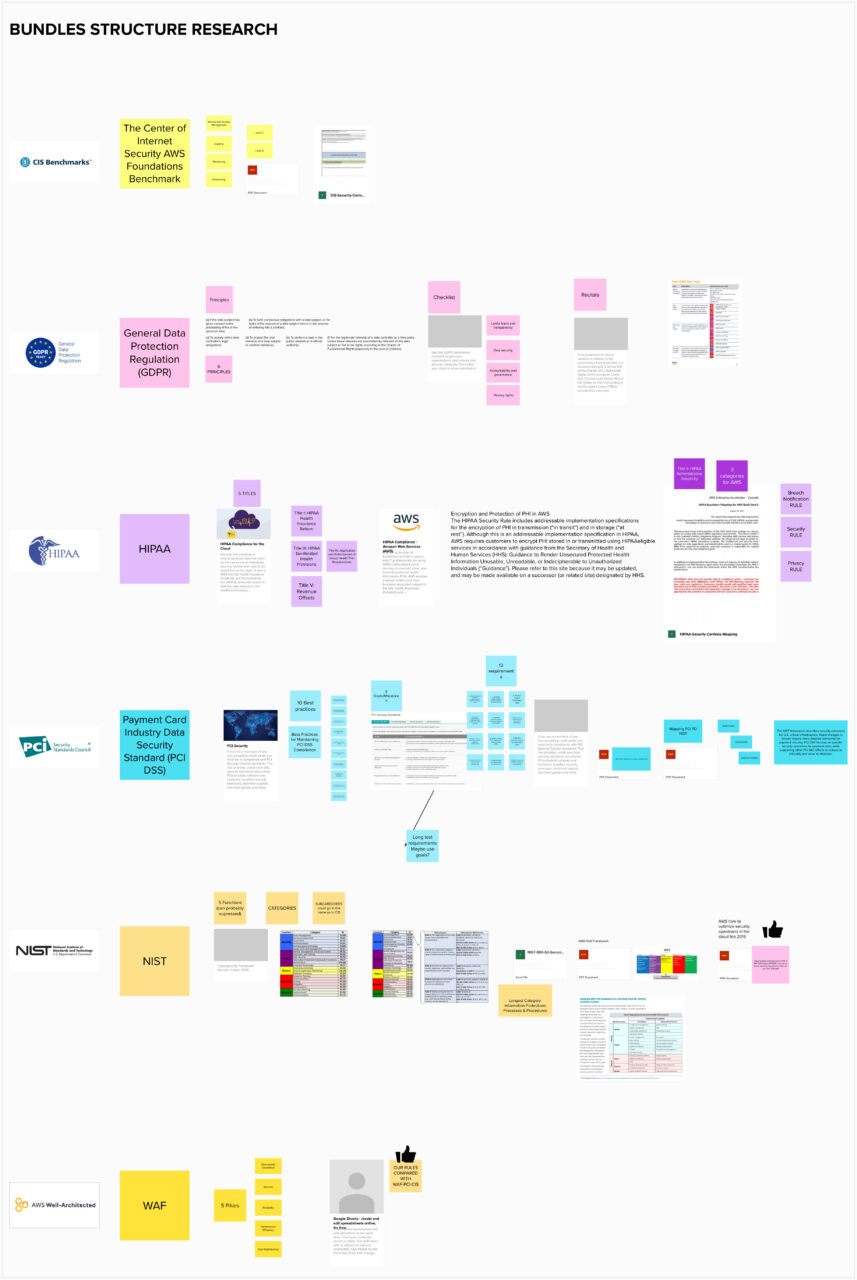
Understanding the different structures allowed me to make data backed design decision.
Then, I defined the Information Architecture that will be used to show the different pieces of information with enough flexibility to have a standard template that will enable future additions and updates for new frameworks.
This work was iterated collaboratively with the backend developers, keeping in mind the technical details and constraints.
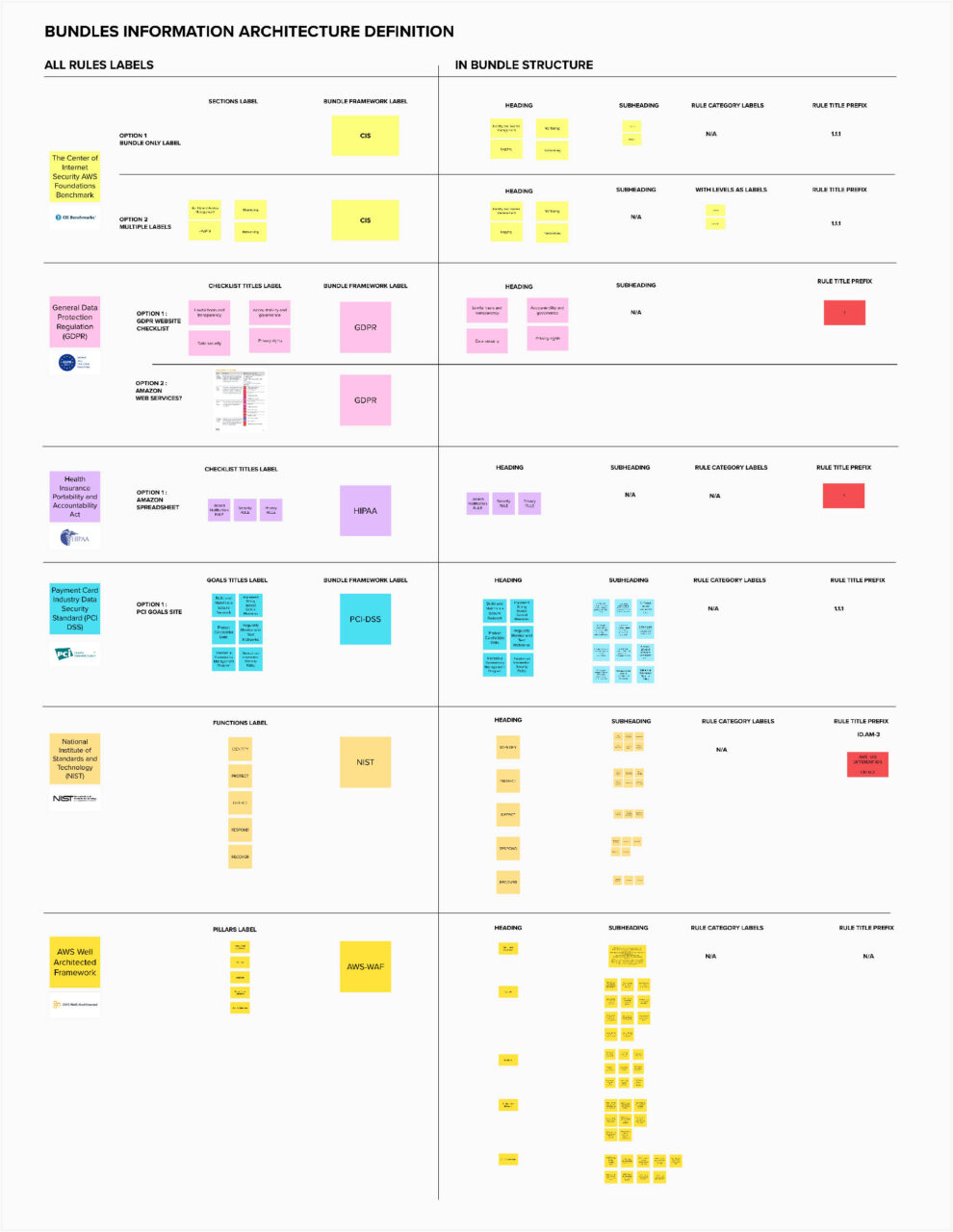
Creating a visual table with the insights made easy to design the baseline template.
MAPPING THE FINDINGS IN THE UI
After researching, I mapped the structure into the interface. This is where the users can see the detailed information about each rule with the documentation.
The challenge was that some rules are the same in different bundles. So we needed a way to show each bundle details.
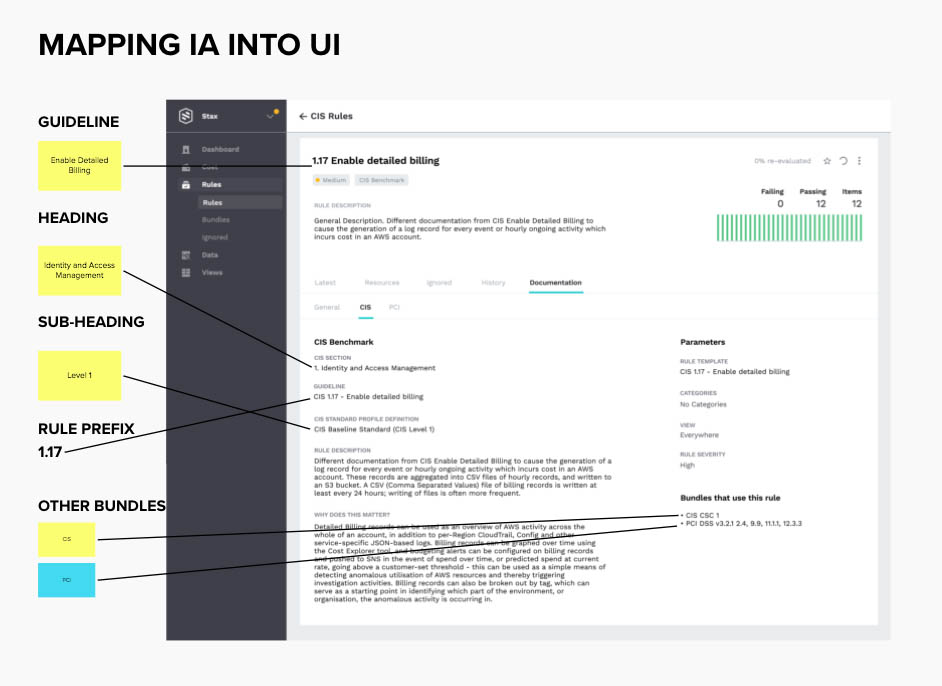
Mapping the UI and variations of the layout.
After exploring different variations, the nested tabs alternative was selected. Although it seems to be a complex pattern, we wanted to test an initial version and get more feedback.
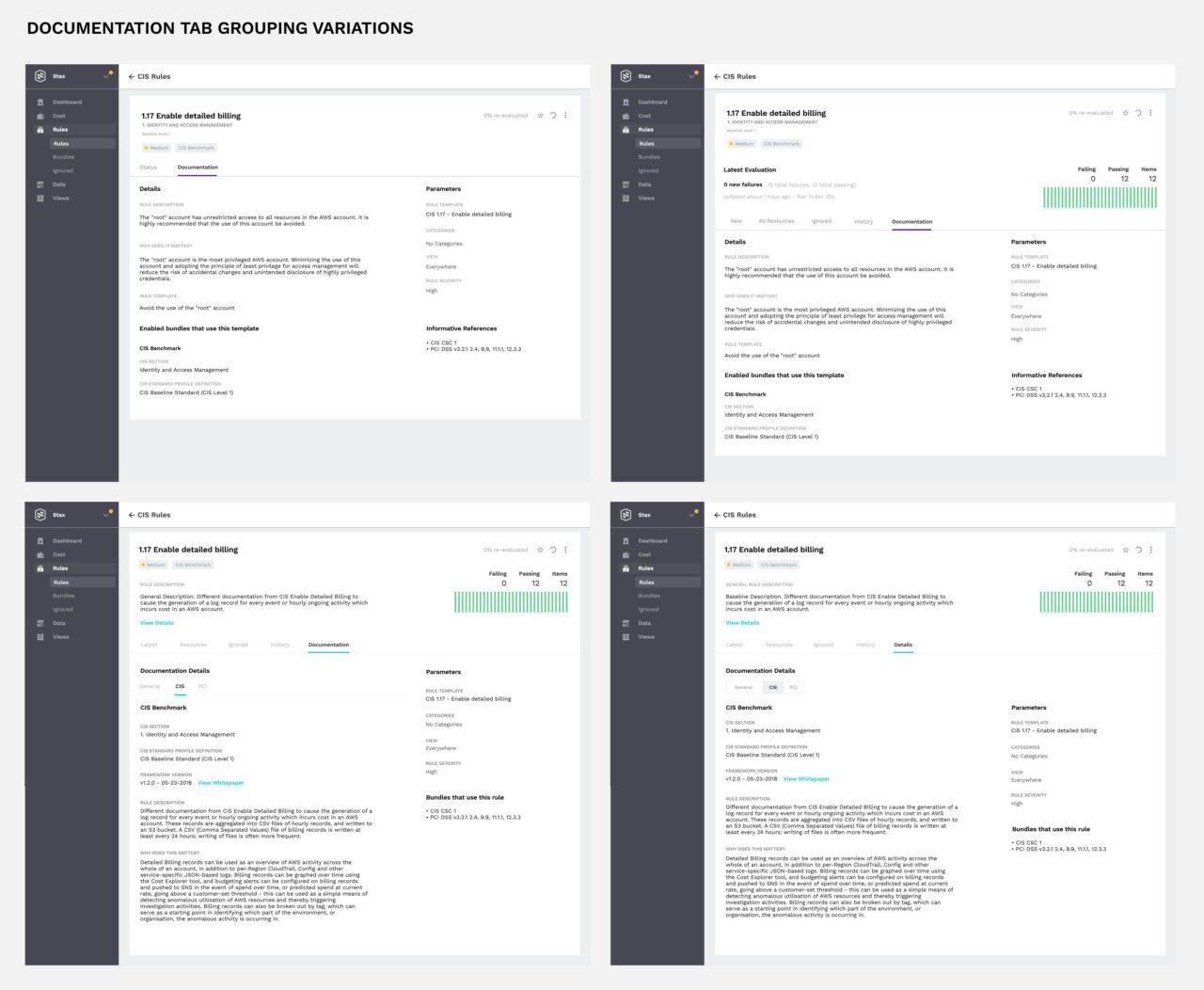
Variations of the tab grouping.
Some bundles have rules in common, but with different names. In order to show this subtle differences without cluttering the UI, I reused the rule categories to show more information on hover.
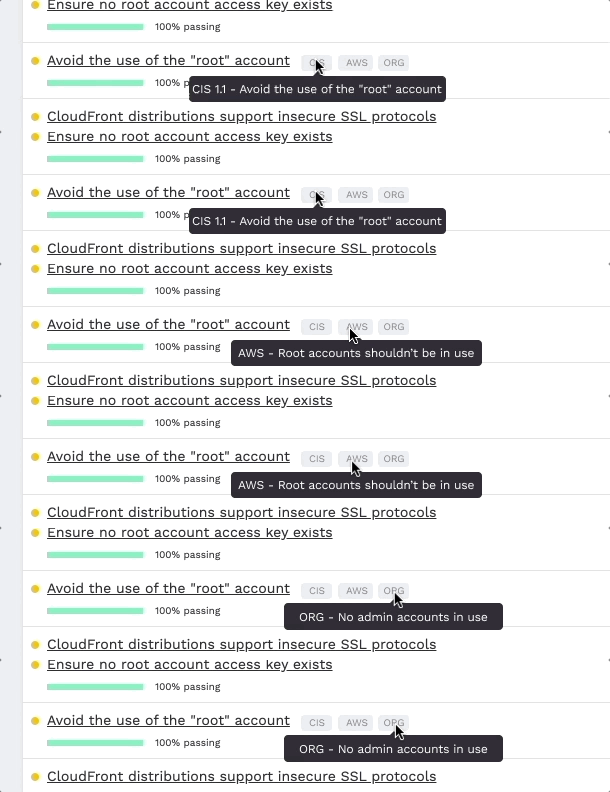
Displaying more information on hover.
Add a Bundle
Implemented userflow for adding a rule bundle.
Remove a Bundle
Implemented userflow for removing a rule bundle.
FEEDBACK FROM MY TEAM


